Quick Answer
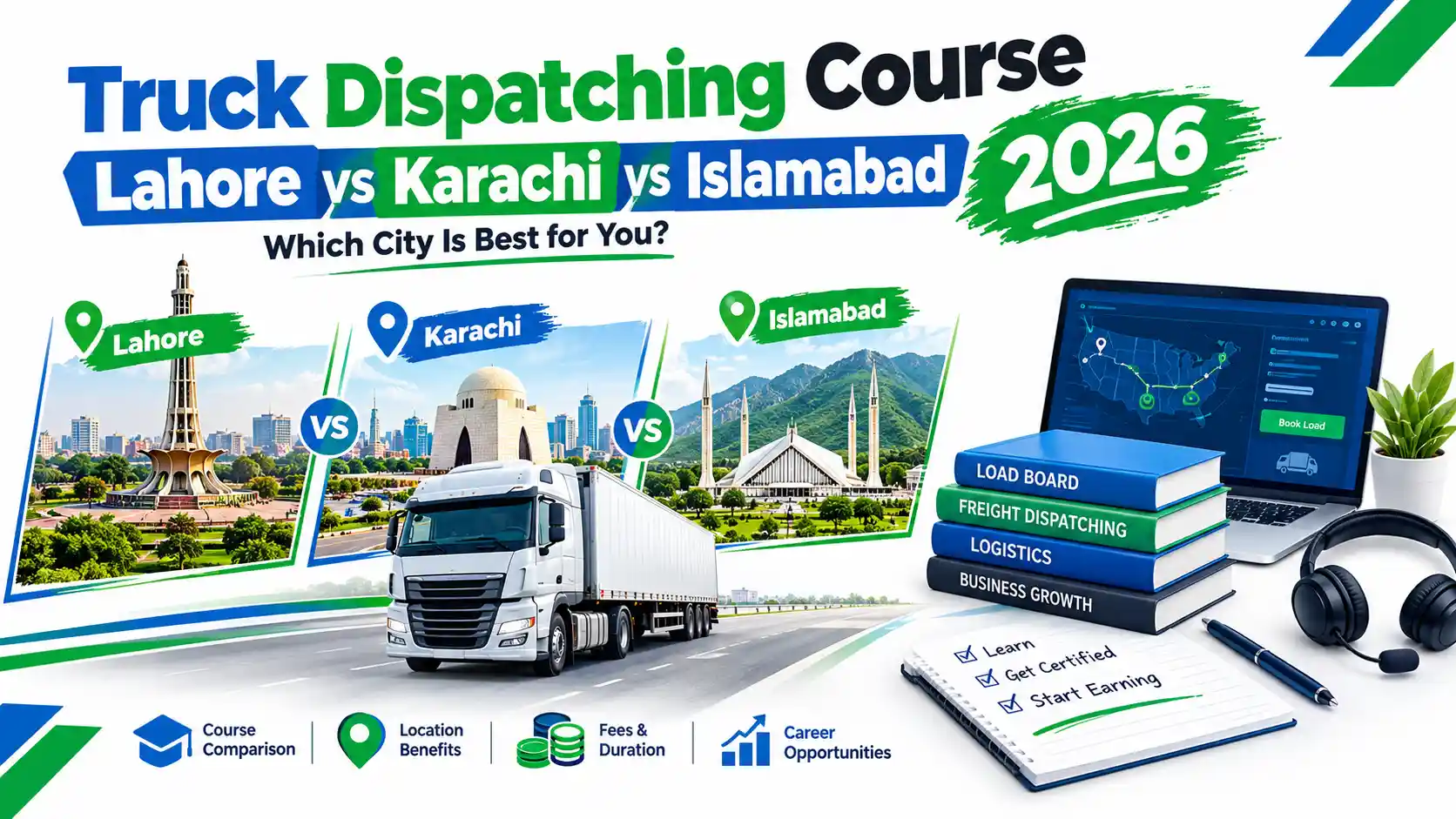
For truck dispatching courses, Lahore suits freelancers who want to add dispatching to existing remote-work skills, Karachi suits entrepreneurs building a full dispatch agency, and Islamabad suits IT-background professionals seeking a structured, tech-comfortable learning environment. All three cities offer genuinely comparable training quality; the right choice depends more on your existing background and goals than on the city itself. The Institute of Digital Trainings (IDT) runs its Truck Dispatching Course from campuses in all three cities, so location doesn't have to limit your options.
Introduction
Picking between a truck dispatching course in Lahore, Karachi, or Islamabad feels like it should be simple, but the honest answer is that it depends less on which city has "better" training and more on what kind of dispatcher you want to become. This is a genuinely common question among students weighing their options, and it deserves a clear, direct comparison rather than vague reassurance that "all cities are fine."
This guide breaks down the real differences between these three cities for dispatching training — local ecosystem, networking, cost, and long-term fit — based on the training experience at the Institute of Digital Trainings (IDT), Pakistan's dispatching-focused training provider with campuses in all three locations. If you want the fuller picture on what a good truck dispatching course should actually teach before diving into city comparisons, that's covered in more depth separately — here, we're focused specifically on helping you choose the right city for your situation.
Key Takeaways
- Lahore has the strongest existing freelance ecosystem, making it easiest for Upwork/Fiverr freelancers to transition into dispatching.
- Karachi offers unmatched exposure to logistics, trade, and shipping culture, favoring students who want to build a dispatch agency rather than work solo.
- Islamabad draws heavily from its IT-educated workforce, making it a strong fit for tech-comfortable learners who want structured, disciplined training.
- Course curriculum and quality don't differ meaningfully by city when studying with the same institute — what differs is the local support ecosystem around you.
- Cost of living and networking opportunities vary by city, which can affect how quickly you build local client-referral networks even in a remote-work field.
- IDT operates physical campuses in Islamabad, Lahore, and Karachi, so students in any of the three cities can access in-person training.
Why Does City Choice Even Matter for a Remote Career?
City choice matters for truck dispatching training because even though the job itself is fully remote, your local ecosystem — existing freelance culture, business networking, and cost of living — shapes how quickly you build confidence and your first client base. The dispatching work itself doesn't care where you're sitting, but your learning environment does.
In our training sessions, we've noticed students from cities with an already-active freelance or business culture tend to adapt faster to the client-acquisition side of dispatching, since they've already built comfort with remote client communication before starting the course. This is why the city question is worth taking seriously rather than defaulting purely to "whichever campus is closest." IDT's truck dispatching career guide 2026 covers the national picture in more depth if you want additional context before comparing cities.
Lahore: Strengths and Weaknesses for Dispatching Training
Lahore's biggest advantage for dispatching training is its already-established freelance and call-center ecosystem, with numerous dispatch operations already serving American trucking companies from the city. Freelancers transitioning from Upwork or Fiverr into dispatching find Lahore's environment particularly supportive.
Strengths:
- Strong existing base of freelancers with remote-client communication experience.
- Established dispatch call centers create informal networking and job-referral opportunities.
- High density of digital-skills training options overall, including IDT's Lahore-based Truck Dispatching Course.
Weaknesses:
- Higher competition among dispatchers in the local market, since it's already a recognized hub.
- Less exposure to physical logistics/trade infrastructure compared to Karachi.
Lahore fits best if you're already comfortable with remote freelance work and want to add a higher-paying skill to an existing portfolio, rather than starting a completely new career path from zero.
Karachi: Strengths and Weaknesses for Dispatching Training
Karachi's position as Pakistan's commercial capital and largest port city gives dispatching students direct, everyday exposure to logistics, shipping, and trade culture that other cities simply don't offer. This context helps students who want to eventually run a dispatch agency rather than work as a solo dispatcher.
Strengths:
- Strongest logistics and trade-industry exposure in the country.
- Business-minded local culture supports agency-building ambitions.
- Large market size means more potential local clients if you also serve Pakistani import/export businesses alongside US carriers.
Weaknesses:
- Longer commute times in a large, spread-out city can affect in-person class attendance consistency.
- Slightly less freelance-culture crossover compared to Lahore's Upwork/Fiverr base.
Students at IDT's Karachi campus often bring existing trade or shipping-adjacent backgrounds, which shortens their learning curve specifically around broker negotiation and cargo terminology.
Islamabad: Strengths and Weaknesses for Dispatching Training
Islamabad's large IT-educated workforce gives dispatching students a natural head start with dispatch software, load board interfaces, and general tech comfort compared to less tech-saturated markets. The capital's stable business environment also supports consistent, disciplined training schedules.
Strengths:
- Tech-comfortable student base picks up load board tools and dispatch software quickly.
- Stable, professional business environment supports structured learning.
- Twin-cities access (Islamabad/Rawalpindi) widens the local student pool.
Weaknesses:
- Smaller existing dispatch-specific ecosystem compared to Lahore's call-center culture.
- Slightly less direct trade/logistics exposure compared to Karachi.
Islamabad fits well for IT professionals or recent graduates who want a highly structured environment and are comfortable learning new software quickly, even without prior trade or freelance experience. IDT's main Islamabad campus reflects this — a large share of enrolled students come from IT and computer science backgrounds.
Side-by-Side Comparison Table
| Feature | Lahore | Karachi | Islamabad |
| Existing Freelance Culture | Strongest (Upwork/Fiverr crossover) | Moderate | Strong (IT-sector crossover) |
| Logistics/Trade Exposure | Moderate | Strongest | Limited |
| Tech Comfort of Local Talent | High | Moderate | Highest |
| Best Fit For | Solo dispatchers, freelance-to-dispatch switchers | Agency builders, trade-background students | Structured learners, IT professionals |
| Local Competition Level | Higher (established hub) | Moderate | Growing but less saturated |
| IDT Campus Available | Yes | Yes | Yes (main campus) |
| Recommendation | Great if you already freelance | Great if you want to scale an agency | Great if you want structured, disciplined training |
Which City Is Best for You? A Decision Framework
The right city depends on your existing background more than the training itself — freelancers should lean toward Lahore, aspiring agency owners toward Karachi, and structured learners from IT backgrounds toward Islamabad.
Use this quick decision checklist:
- Choose Lahore if: You already freelance on Upwork or Fiverr and want to add a higher-paying skill without starting over completely.
- Choose Karachi if: You want to eventually manage multiple carriers as a full dispatch agency, or you already work in trade, import/export, or shipping.
- Choose Islamabad if: You come from an IT or computer science background and want a highly structured, tech-comfortable learning environment.
- Any city works if: You're relocating for the course anyway or plan to work fully remotely without relying on local networking.
Since the actual dispatching job is remote, none of these choices lock you out of national or international clients — the difference is purely in your local learning and networking environment while you build the skill.
Does Course Quality Actually Differ Between Cities?
Course quality shouldn't differ meaningfully between cities when studying with the same institute, since curriculum, load board access, and instructor training are standardized across campuses. What genuinely differs is the surrounding ecosystem, not the technical content taught.
This is an important distinction many students miss — they assume one city must have "better" dispatching training than another, when in reality institutes like IDT teach the same Truck Dispatching Course curriculum across Islamabad, Lahore, and Karachi. The meaningful variable is which local environment helps you personally learn and network faster, not which city's classroom is "better." Book a seat at your nearest campus to compare batch schedules directly.
Cost of Living and Training Investment by City
Cost of living varies moderately across the three cities, with Karachi and Islamabad generally running slightly higher than Lahore for accommodation and daily expenses, though course fees themselves are typically standardized nationally by a single institute. This matters mainly for students relocating specifically for training rather than local residents.
If you're already living in one of these cities, this factor is largely irrelevant — you'd only weigh cost of living if considering relocating purely for the course, which most students don't need to do given how widely available quality training now is across all three cities.
Networking and Community Support by City
Lahore offers the strongest existing dispatcher peer network due to its established call-center culture, Karachi offers the strongest cross-industry business networking, and Islamabad offers the strongest tech-professional peer network. These informal networks often matter more long-term than the course itself for finding your first few clients.
New dispatchers frequently underestimate how much peer networking helps in the early months — swapping broker leads, troubleshooting rate negotiation scripts, and sharing which carriers pay reliably all happen faster within an active local peer group. IDT's guide on finding clients for a dispatching business touches on how these informal networks accelerate the client-acquisition process regardless of which city you're training in.
Common Mistakes When Choosing a City or Institute
- Choosing based purely on proximity rather than which local ecosystem actually fits your background and goals.
- Assuming one city has fundamentally better training when curriculum quality is usually standardized across an institute's campuses.
- Ignoring your own background. A trade-industry professional in Islamabad might still be better served choosing Karachi-style content focus, even while training locally.
- Overweighting cost of living for students who already live in their chosen city and aren't actually relocating.
- Underestimating the value of local peer networks, which matter more for early client acquisition than most students initially expect.
Future Trends: Does City Matter Less by 2026?
City differences are gradually becoming less important as remote dispatching normalizes across Pakistan, with even smaller cities like Faisalabad, Multan, and Peshawar now producing successful dispatchers. The core skill — load board fluency and broker negotiation — travels with the person, not the city.
That said, the three major hubs still offer real, distinct advantages in 2026 for students who want in-person training and local peer support rather than studying in isolation. As AI-assisted load matching tools continue reshaping daily dispatch work, the city question increasingly matters less than how well a student masters these evolving tools — a trend covered further in IDT's AI tools for truck dispatchers guide.
2026 Trend Callout: More institutes, including IDT, are expanding hybrid in-person/online delivery, which is gradually reducing how much city choice matters for accessing quality training — though local peer networking advantages remain city-specific for now.
Why Choose IDT for Truck Dispatching Course Comparison Across Cities
Whichever city fits your background best, the training quality itself shouldn't be a compromise. Institute of Digital Trainings (IDT) runs the same structured Truck Dispatching Course curriculum across its Islamabad, Lahore, and Karachi campuses, so you get consistent, hands-on load board and negotiation training no matter which city you choose. Students also get access to the institute's broader support resources, including client-acquisition guidance and career support, regardless of location. If you're ready to compare batch availability across cities, book a seat with IDT's admissions team and get city-specific guidance for your situation.
FAQs
1. Which city has the best truck dispatching course — Lahore, Karachi, or Islamabad?
There's no single "best" city — Lahore suits freelancers, Karachi suits aspiring agency owners, and Islamabad suits IT-background students seeking structured training. Course quality itself is comparable across all three when studying with the same institute.
2. Does it matter which city I train in if the job is remote?
Not for the work itself, since dispatching is done remotely regardless of location. It matters mainly for your local learning ecosystem, networking, and how quickly you connect with peers who can help you find early clients.
3. Is Lahore better for freelancers wanting to add dispatching as a skill?
Yes, Lahore's established freelance culture and existing dispatch call-center ecosystem make it especially supportive for freelancers transitioning into dispatching.
4. Is Karachi better for building a dispatching agency?
Karachi's strong logistics, trade, and business culture makes it a natural fit for students who want to scale into managing multiple carriers as a full agency rather than working solo.
5. Is Islamabad better for IT professionals switching careers?
Yes, Islamabad's large IT-educated workforce gives students a head start learning dispatch software and load board tools, and its structured business environment suits disciplined, tech-comfortable learners.
6. Can I switch cities after starting a truck dispatching course?
This depends on the institute's policy — check with your chosen provider directly, though most dispatching skills transfer easily since the work itself is remote and location-independent.
7. Do all three cities offer the same truck dispatching course curriculum?
When training with the same institute, yes — curriculum, load board access, and instructor quality are typically standardized across campuses, with local networking and ecosystem being the real differentiator.
8. Is truck dispatching training available online if I'm not near any of these three cities?
Some institutes, including IDT, are expanding hybrid online/in-person delivery, making training more accessible for students outside the three major hubs.
Conclusion
Lahore, Karachi, and Islamabad each offer genuinely strong environments for truck dispatching training, and the right choice comes down to your existing background and goals rather than any city having objectively "better" training. Freelancers tend to thrive in Lahore, aspiring agency builders in Karachi, and structured IT-background learners in Islamabad — but all three connect to the same remote, dollar-earning dispatching career.
If you'd like personalized guidance on which campus fits your situation best, book a seat with IDT's admissions team and get direct answers about batch schedules in your city.
Last Updated: September 2026. City-specific details reflect publicly available industry information as of 2026; course schedules and campus details should be reconfirmed directly with the institute.